

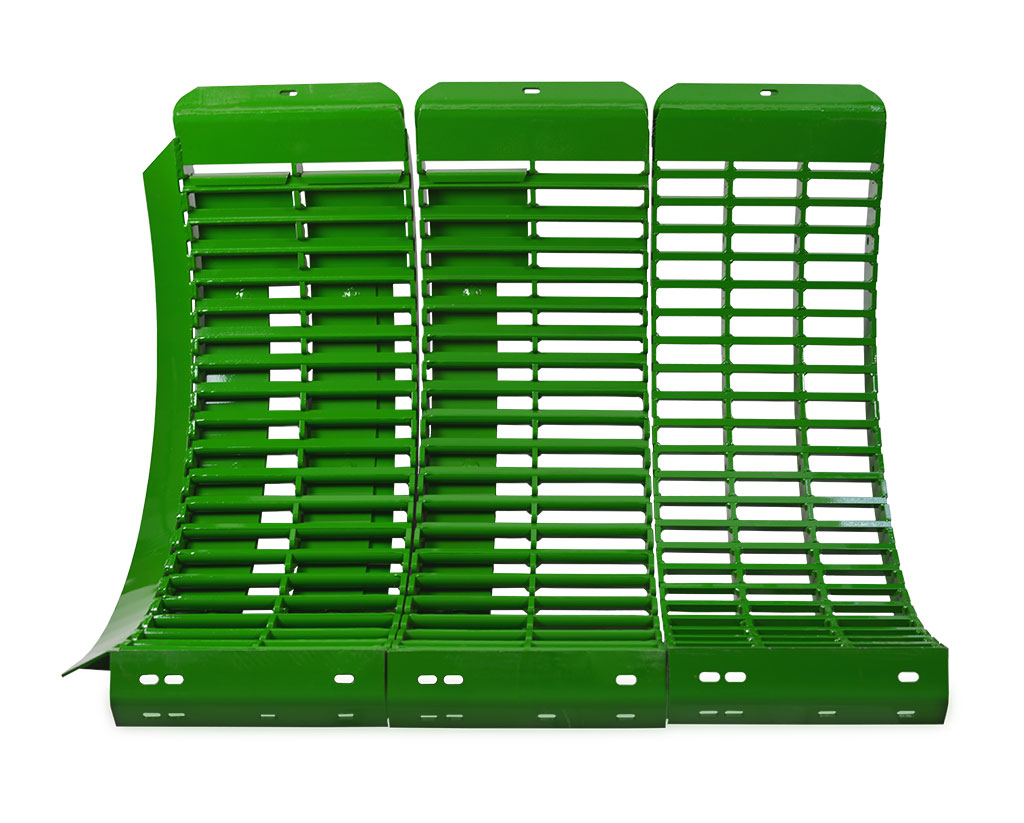
Combine concave replacement
$1,055.00
The combine concave is a curved, perforated component that wraps around the lower portion of the threshing drum or rotor. As the drum spins at high speed, the crop is forced against the concave’s surface, where centrifugal force and impact separate the grain from the stalk and chaff. The grain then passes through the concave’s openings while the straw continues rearward.
Modern concaves are manufactured from high-strength, wear-resistant materials such as hardened C1040 carbon steel, high-carbon wire, and stainless steel. Key design features include wire spacing (narrow for small grains like wheat, wider for corn and beans), bar configuration (smooth or notched for aggressive threshing), and helical patterns for improved crop flow.
Concaves are available in various configurations including front, middle, rear, and side-specific units (left-hand/right-hand), as well as complete sets for full threshing area replacement. Aftermarket concaves often feature upgraded metallurgy and enhanced designs (e.g., variable spacing, helical bars, modular inserts) that outperform OEM equivalents in durability and grain savings. Many farmers report reducing harvest losses to as low as 0.7 bushels per acre after switching to premium aftermarket concaves.
For harvesting a range of crops from corn and soybeans to wheat, barley, canola, and rice, quality concaves ensure optimal threshing efficiency, minimal grain damage, and maximum yield. They are available as direct OEM replacements or performance upgrades for all major brands, including John Deere, Case IH, New Holland, Claas, Kubota, and Gleaner.
There are no reviews yet.