

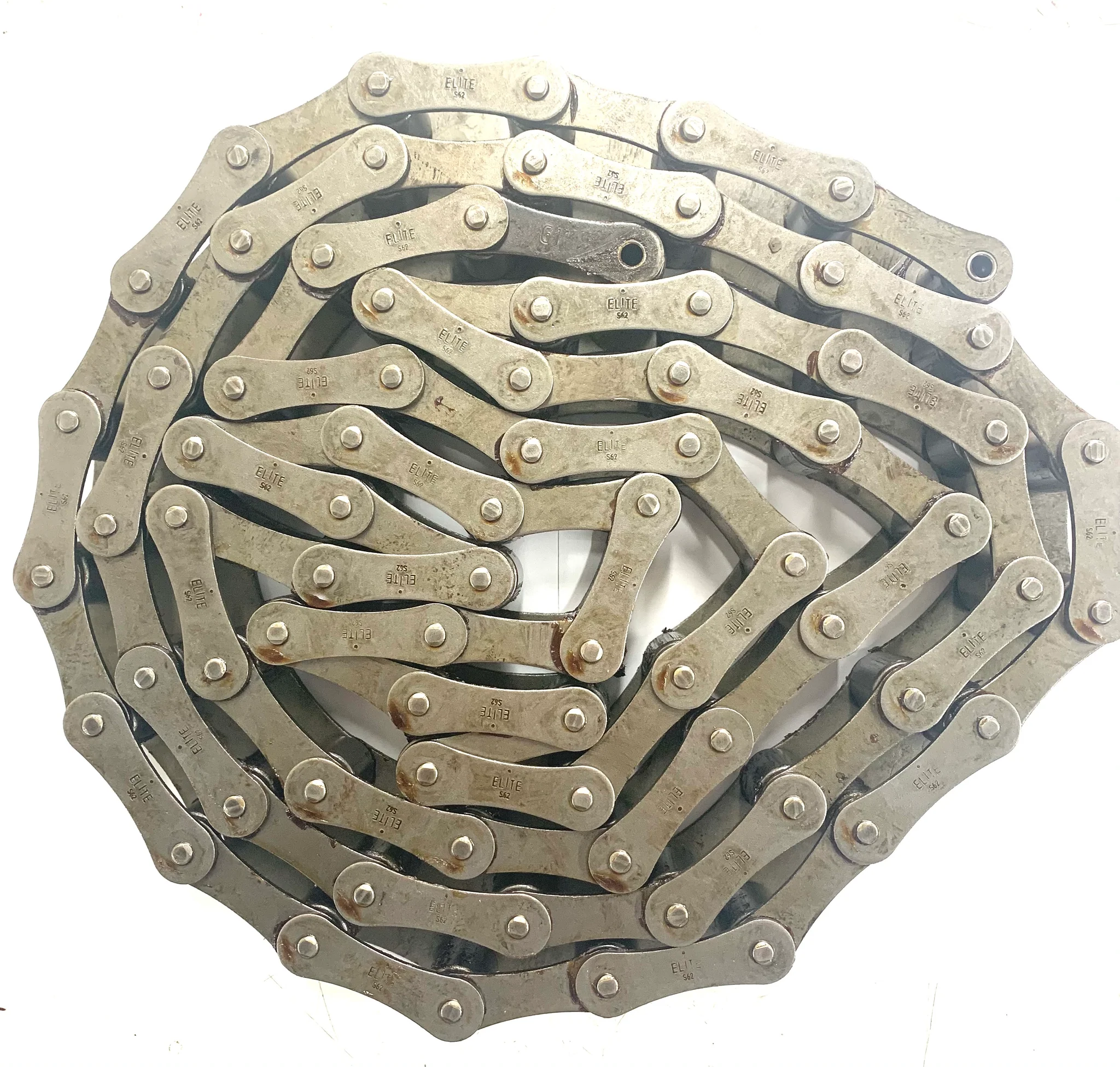
Agricultural roller chain for farm machinery
$129.00
Agricultural chains are precision power transmission components designed to transfer mechanical energy between rotating shafts in farm machinery. They consist of a series of interconnected links with rollers or bushings that engage with sprocket teeth, providing efficient, reliable torque delivery under dusty, high‑load field conditions.
In agricultural applications, chains are used extensively in combine harvesters, balers, planters, tillers, forage harvesters, grain conveyors, and power take‑off (PTO) systems. Common types include roller chains for general power transmission, conveyor chains for moving grain and forage, detachable chains for quick maintenance, and agricultural drive chains for harvesters and tillage equipment.
Manufactured from high‑strength carbon steel, alloy steel, or stainless steel, agricultural chains feature heat‑treated components, corrosion‑resistant coatings, and precision bushings for extended service life. Key specifications include pitch size, roller diameter, tensile strength, and chain series (ANSI, ISO, DIN). Chains are available as simplex (single strand), duplex (double strand), and triplex (triple strand) configurations to match load requirements.
For equipment repair, drivetrain maintenance, or complete restoration, quality agricultural chains ensure positive engagement, reduced downtime, and reliable performance during critical planting and harvest seasons.
The global agricultural roller chain market was valued at US$2.78 billion in 2025 and is projected to reach US$7.3 billion by 2033, driven by increasing farm mechanization and replacement demand for aging equipment.


There are no reviews yet.