

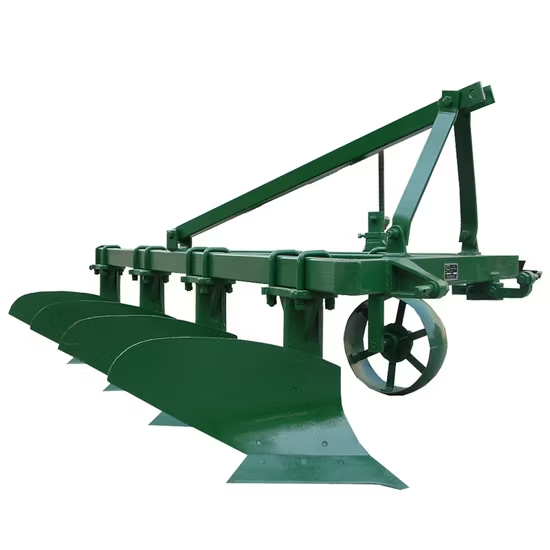
Agricultural plough share replacement
$60.00
A plough share is the critical soil-engaging component of a moldboard plow, responsible for cutting a horizontal slice through the soil at the bottom of the furrow. It is the leading edge of the plow bottom that makes the initial cut, parting the soil and lifting it upward to the moldboard for turning and inversion. This wear part takes the most abuse in tillage operations, constantly battling rocks, roots, and abrasive soil conditions.
Plough shares are typically manufactured from high-grade, heat-treated carbon steel (such as 1080 high carbon steel), manganese steel (65Mn), or high-grade boron steel (30MnB), chosen for its hardness, toughness, and wear resistance. Premium designs may feature tungsten carbide tiles or hardfacing on the leading edge for extreme durability in abrasive or rocky fields. Common share widths range from 10 inches up to 20 inches, with thicknesses from 8 mm to 13 mm.
Shares are available as standard, replaceable-point (bolt-on tip), or reversible styles. Standard shares are replaced as a complete unit, while replaceable-point shares allow the farmer to bolt on a new point multiple times before replacing the main share base. Reversible (two-way) shares can be flipped to use a fresh cutting edge before full replacement is needed. They are also designated as left-hand (LH) or right-hand (RH) depending on the plow bottom orientation.
For tillage efficiency, fuel savings, and consistent plowing depth, a sharp, properly maintained plough share is essential. Dull or worn shares increase draft load, waste fuel, and create poor soil structure.
There are no reviews yet.