

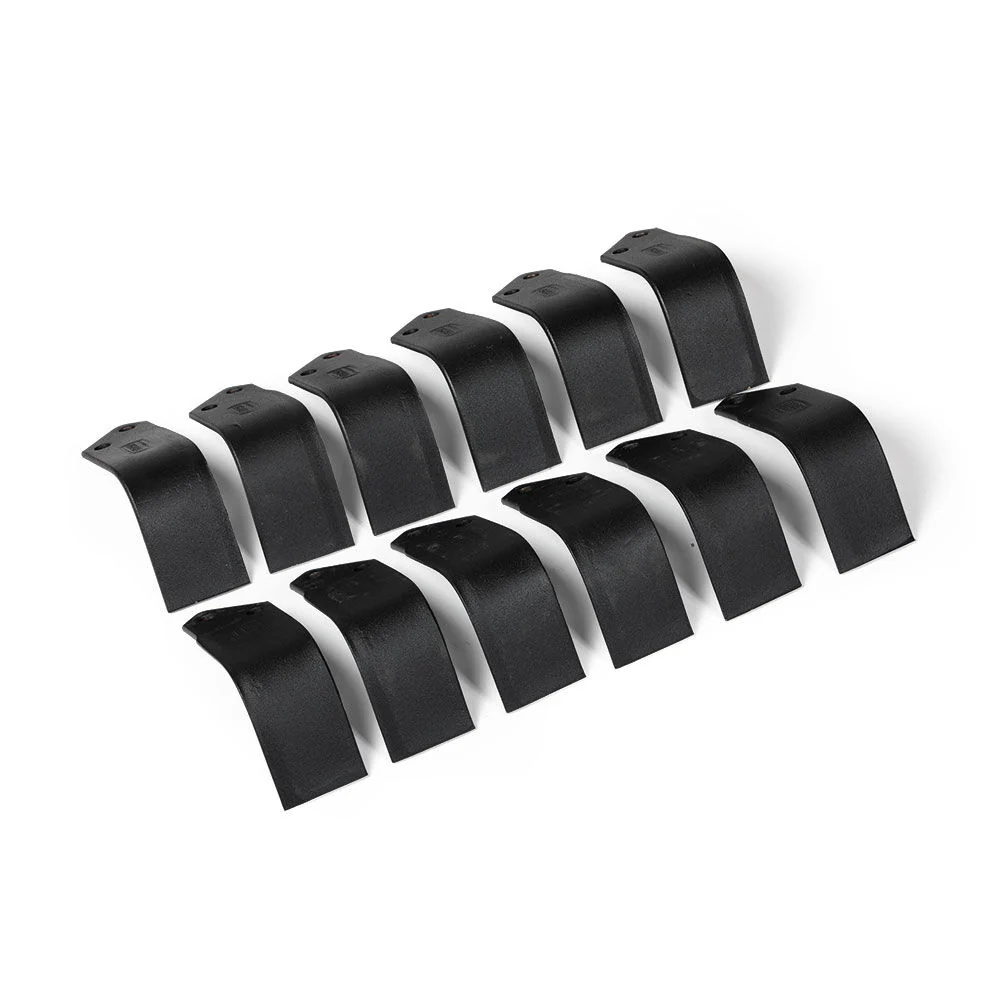
Rotary tiller blade replacement
$128.00
Rotary tiller blades are the primary soil-engaging components of a rotary tiller or rotavator, responsible for breaking ground, pulverizing soil clods, mixing organic matter, and preparing a smooth, uniform seedbed in a single pass. These blades are mounted on flanges along the tiller’s rotor and spin at high speed, cutting and throwing soil rearward to achieve the fine tilth required for planting.
Manufactured from high-strength materials including 65Mn manganese steel, boron steel, and heat-treated carbon steel (1070/1080), quality blades are engineered to withstand extreme abrasion, impact with rocks, and continuous high-speed rotation in demanding field conditions.
Blades are available in several configurations to suit different tillage goals:
-
L‑Blades (L‑Shaped): The most common type, featuring a 90° bend for aggressive soil cutting and mixing. Suitable for general-purpose tillage and primary seedbed preparation.
-
C‑Blades (Curved): A gentler curve than L‑blades, offering smoother soil flow and less power consumption. Ideal for lighter soils and finishing passes.
-
Heavy‑Duty Blades: Thicker gauge (8mm–12mm) with reinforced construction for rocky or hardpan conditions.
Key specifications include blade type (L or C), rotation direction (left‑hand or right‑hand), thickness (e.g., 6mm, 8mm, 10mm), width, bolt hole size, and mounting hole spacing to match specific tiller models.
Blades are available as direct OEM replacements (Maschio, Kuhn, Howard, John Deere) or high‑quality aftermarket units from reputable brands such as A&I Products. For tillage efficiency, fuel economy, and extended equipment life, sharp, properly matched blades are essential.

There are no reviews yet.