

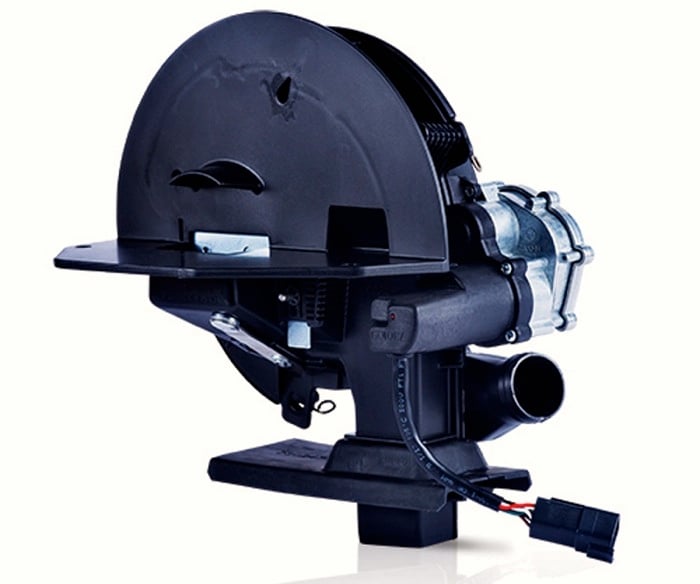
Planter seed metering unit
$150.00
The seed metering unit is the most critical component of any precision planter, responsible for singulating individual seeds and releasing them into the seed tube at the exact moment and spacing required for maximum yield. It acts as the control center of the row unit, ensuring accurate plant populations and uniform emergence.
Metering units come in three primary technologies, each with its own strengths:
-
Vacuum Meters: The dominant standard on modern planters. They use air pressure to hold seeds against a rotating disc. This system is highly accurate, gentle on seeds, and forgiving of variations in seed size and shape.
-
Finger Pickup Meters: A mechanical system that uses a series of spring-loaded fingers to grasp and release seeds. While they are durable and do not require a vacuum system, they need more maintenance and calibration to maintain accuracy.
-
Brush Meters: The simplest design, relying on a rotating brush to control the flow of seeds. They are affordable and easy to use, but offer lower accuracy compared to vacuum or finger systems, making them suitable for soybeans and other less precise crops.
Metering units are available as complete OEM assemblies (John Deere MaxEmerge, Precision Planting, Kinze), as high-performance aftermarket upgrades (Precision Planting eSet and vSet), or as individual components for repair and rebuild. Key components include the meter housing, singulator, seed disc (for vacuum meters), fingers (for finger pickup meters), brushes, and drive system (mechanical chain drive or electric motor).
For planting accuracy, stand uniformity, and maximum yield potential, a properly maintained, high-quality metering unit is the best investment a farmer can make.

There are no reviews yet.