

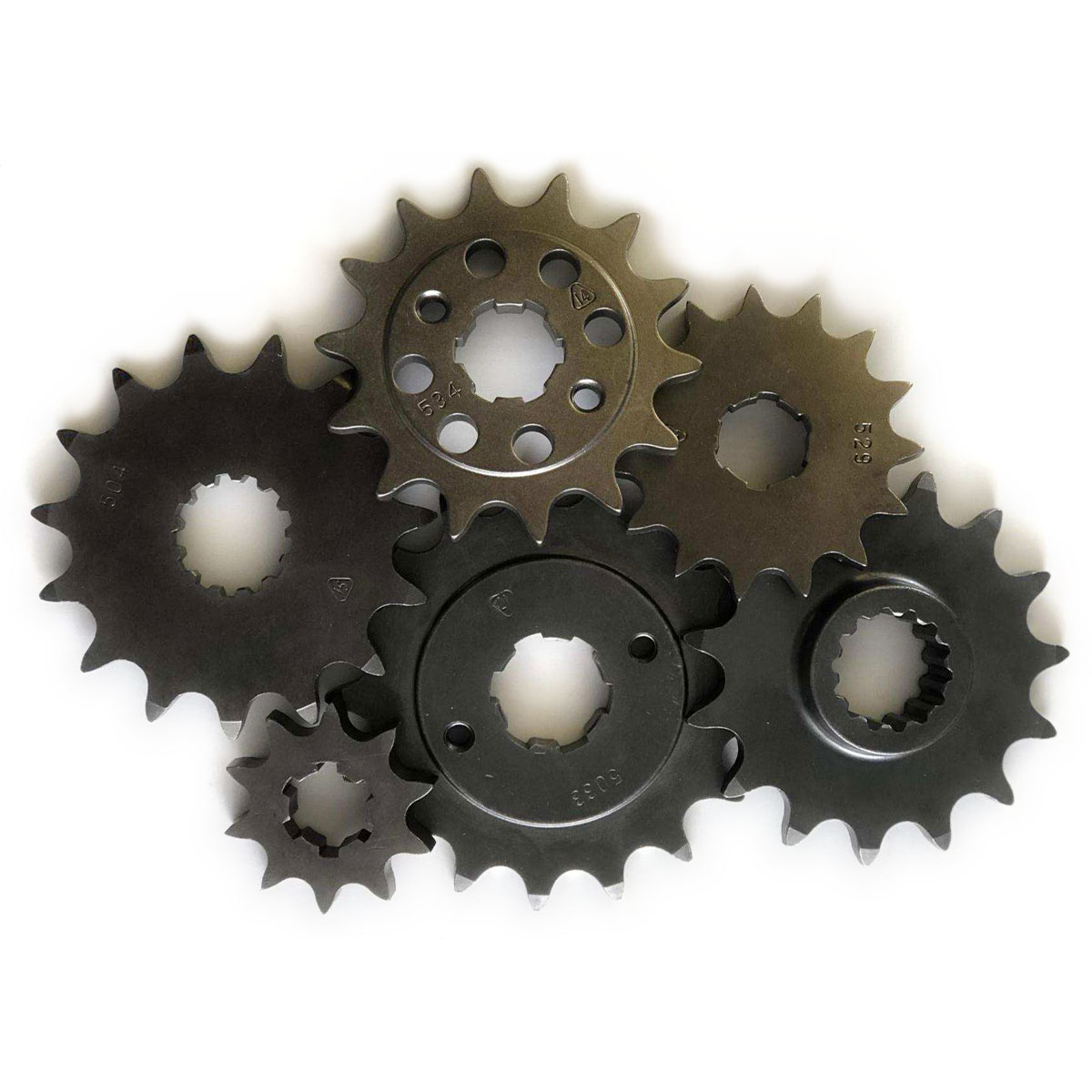
Agricultural sprocket for farm machinery
$80.00
Sprockets are toothed wheels that engage with chains to transmit rotary motion and mechanical power in agricultural machinery. They are essential components in a wide range of farming equipment including tractors, combine harvesters, balers, planters, tillers, forage harvesters, and conveyor systems. By working in conjunction with roller chains, sprockets ensure efficient power transfer from the engine or gearbox to driven implements such as feeder houses, augers, and drive wheels.
Agricultural sprockets are manufactured from high strength materials including carbon steel, alloy steel, cast iron, and engineering plastics. Key specifications include number of teeth, pitch diameter, bore size, hub configuration (Type A, B, or C), and strand type (simplex, duplex, or triplex). Common surface treatments include black oxide, zinc plating, and phosphate coating for corrosion resistance.
Sprockets are available as standard off the shelf components or custom engineered parts to match original equipment specifications for brands such as John Deere, Massey Ferguson, New Holland, Kubota, Mahindra, and Case IH. For equipment repair, drivetrain maintenance, or complete restoration, quality sprockets ensure reliable chain engagement, reduced wear, and extended service life in demanding farm environments.
The global agricultural machinery sprocket market is projected to grow from US$2.78 billion in 2025 to US$4.79 billion by 2032, driven by increasing mechanization in emerging economies and replacement demand for aging equipment.

There are no reviews yet.